- The Birthday Month: Why June Always Brings Cake and Clarity
- Science fun in the studio
- The Bookworm
- The couch potato
- Fear: The Quiet Cage
The Birthday Month: Why June Always Brings Cake and Clarity
June is a birthday month in the Goldsmith household, which means one thing: my to-do list suddenly grows longer legs. Between teen parties, requested meals out, cakes to bake (sometimes at odd hours), gift wrapping (which I still haven’t mastered), and general festive logistics, it’s a busy stretch. But honestly? I wouldn’t have it any other way.
Birthdays, for all their chaos, are a joy. They’re a reminder that we’re alive, loved, and woven into someone’s world so much that we’d be missed if we were gone. That’s worth celebrating—balloons or not.
Unlike the movies with their extravagant surprise parties and Pinterest-worthy decor, I keep it simple. No surprises here—either in giving or receiving. I just ask what they want to eat, what they’d love to unwrap (even if they don’t need it), and where they’d like to go. Everyone’s happy, and it’s blissfully straightforward.
Maybe that simplicity harks back to my childhood. We didn’t have much, but we had birthdays. No parties, just a cake—my mother’s vanilla cake, baked without an oven. She’d pour the batter into a bundt tin, place it over a hob with a container of sand underneath, and let it slow-cook to golden perfection. The smell? Heavenly. The texture? Still unmatched, even by my high-tech kitchen gadgets.
Whisking the batter was a ritual—one I shared with my mother. She insisted it be light and airy, and we took turns until it passed her standard. The cake would be sliced, stored in tins, and slowly devoured by us—the three musketeers—over the following days. It was humble. It was heartfelt. And it was everything.
So now, every June, amidst the candles and cards and chaos, I remember that warmth. Those early birthdays keep me grounded. Because at the heart of it, birthdays aren’t about grandeur—they’re about presence. And the company you keep always matters more than the cake you serve (though a good cake never hurts).
Science fun in the studio
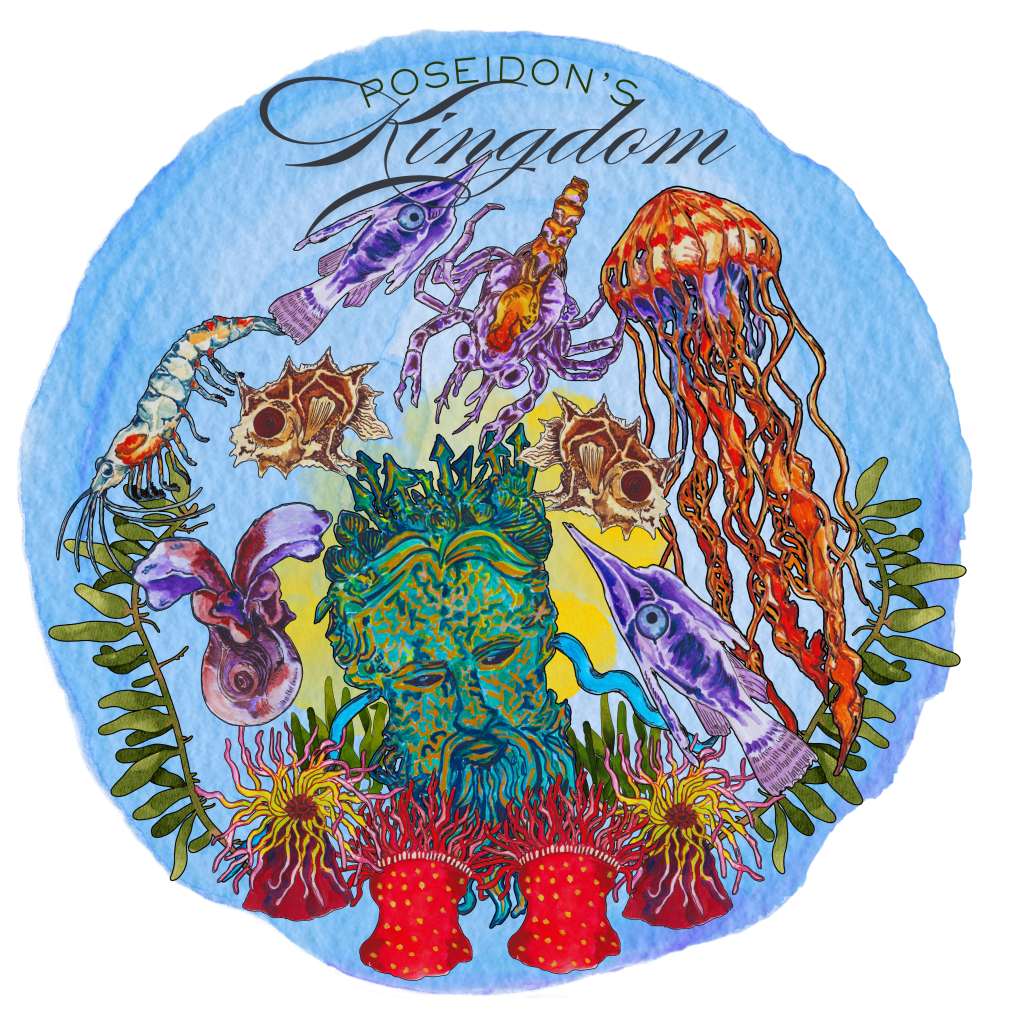
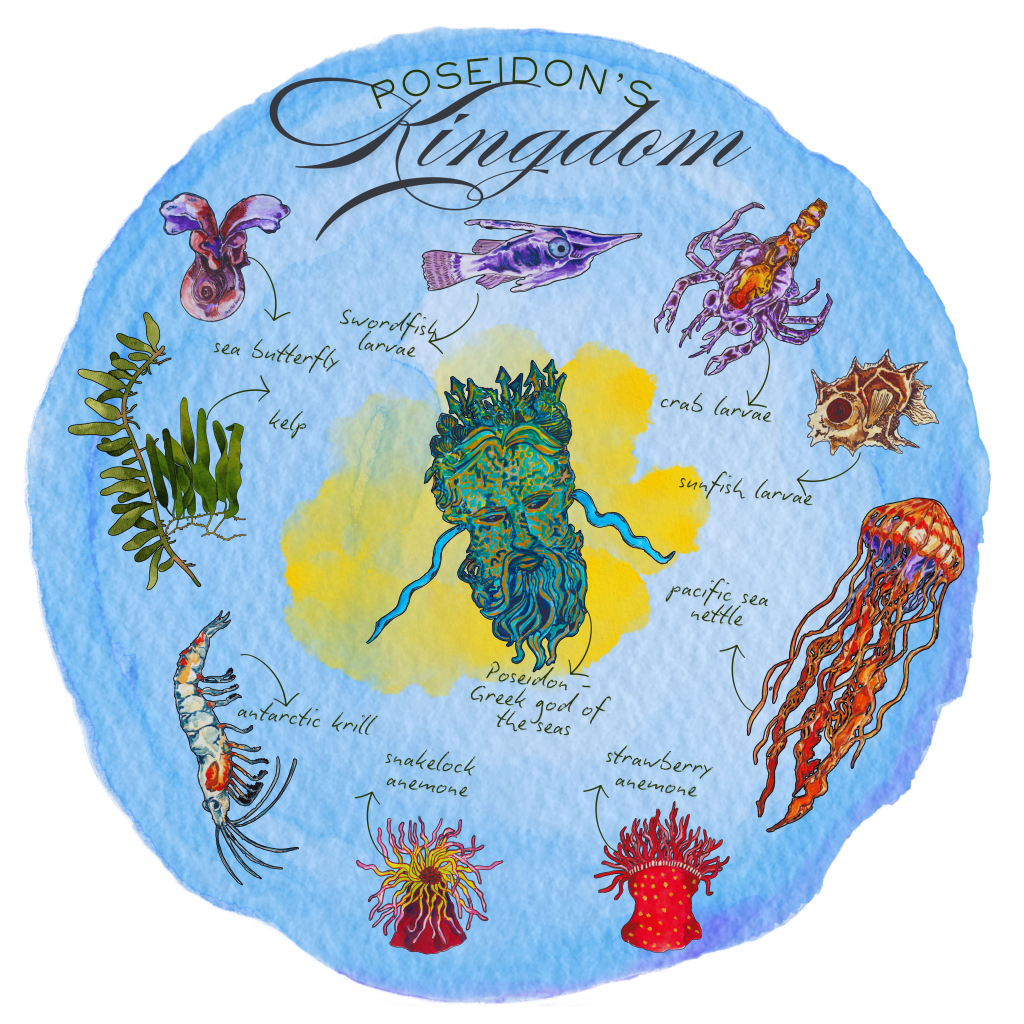
This month, I’ve been swept away by the tides of inspiration—turning my attention to scientific illustration with a focus on the mysterious beauty of the ocean. Channeling both my love for marine life and scientific detail, I created a piece featuring individually hand-drawn members of the Zooplankton and Cnidaria families. Think delicate jellyfish, ghostly comb jellies, and the invisible architects of the food web—brought to life on paper.
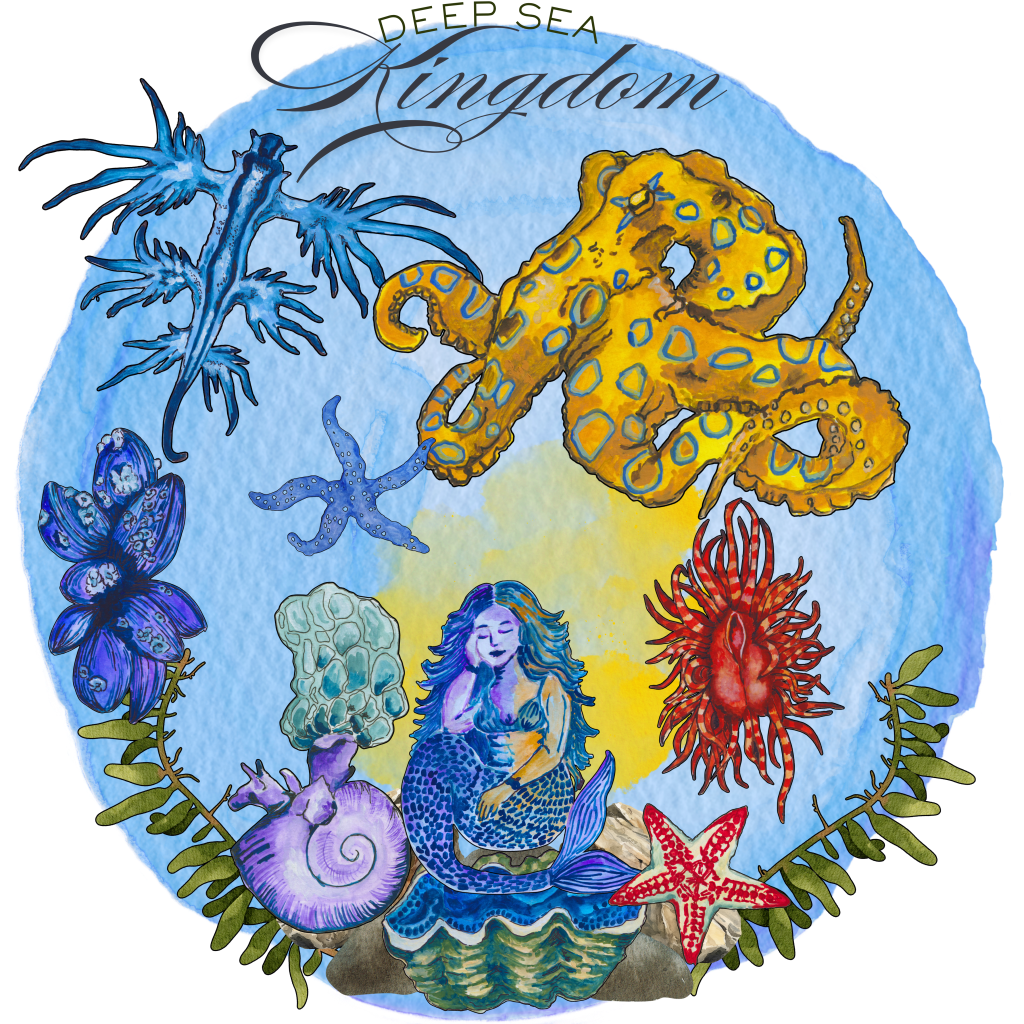
It’s a small tribute to Poseidon’s kingdom, that awe-inspiring world beneath the waves. For us land dwellers, the ocean is more than just water—it’s a breathing, pulsing expanse that reminds us how vast, wild, and wondrous our planet truly is. A humbling blue, alive with secrets.
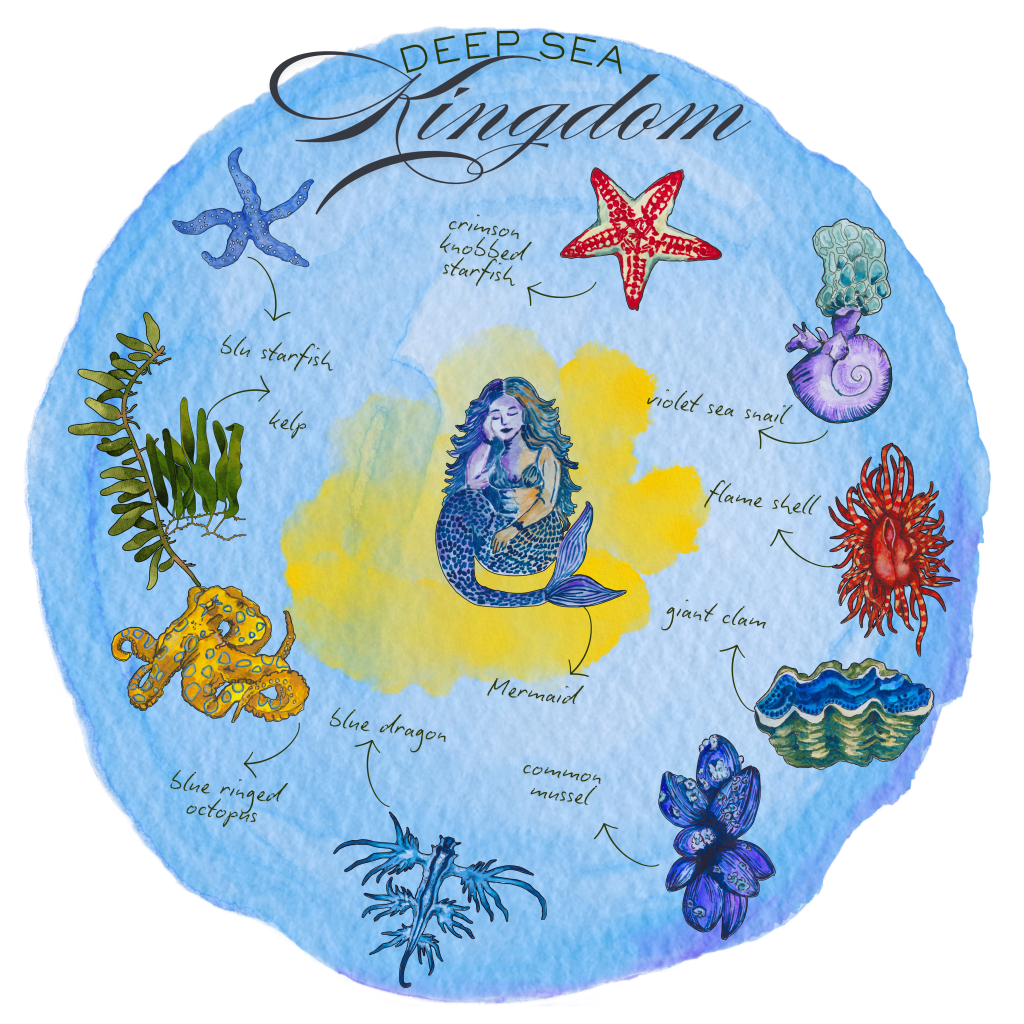
Beneath the ocean’s surface lies a world few ever see—a realm of darkness, pressure, and extraordinary life. Four fascinating groups—bivalves, echinoderms, cephalopods, and gastropods—help shape this hidden habitat, each contributing to the deep sea’s balance and beauty.
Bivalves like the common mussel and fiery flame shell attach to rocks, filtering water and offering shelter. The massive giant clam, glowing with algae-rich tissue, lies open on coral beds, part of an ancient survival strategy.
Echinoderms such as the bright blue starfish and the dramatic crimson knobbed starfish sweep the seafloor, scavenging and maintaining a clean, healthy ecosystem.
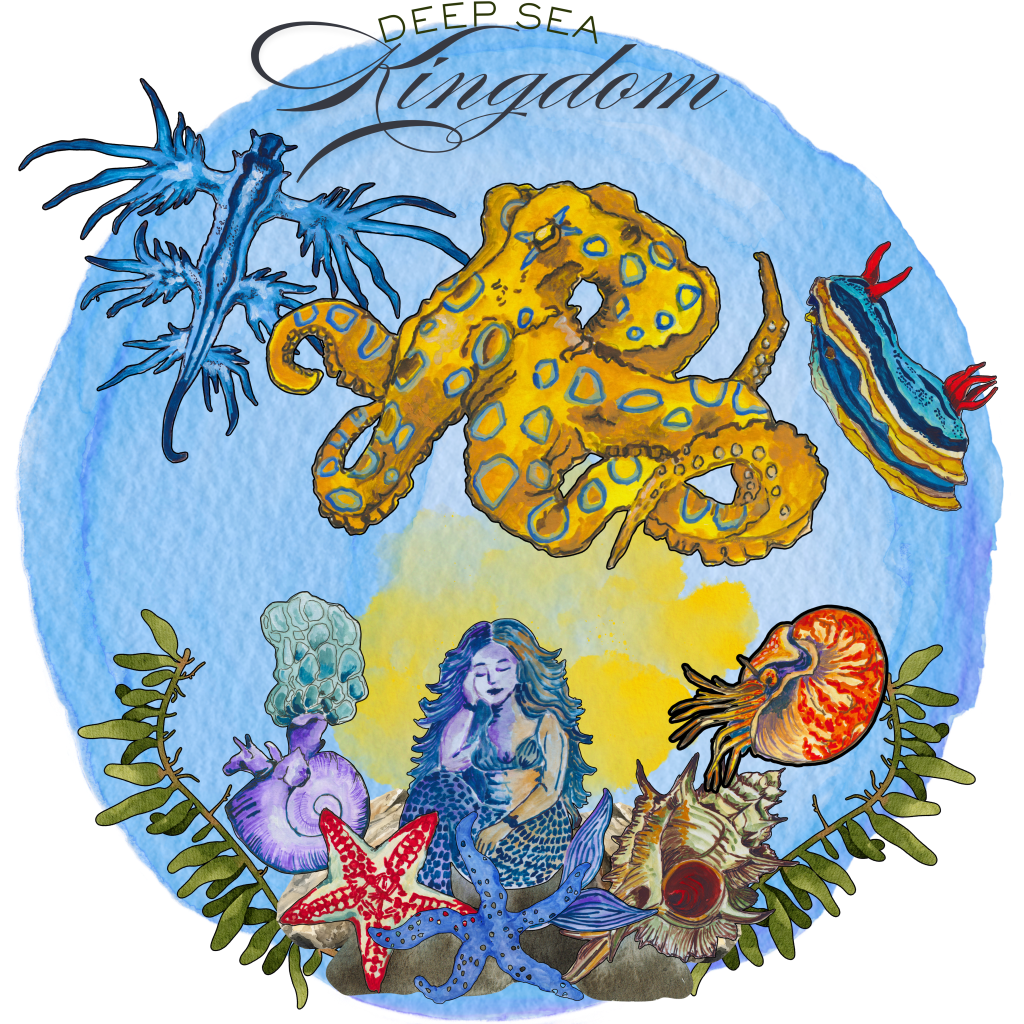

In the inky waters, cephalopods dazzle with their intelligence. The tiny but venomous blue-ringed octopus flashes neon warnings, while the elegant chambered nautilus glides through the dark like a fossil come to life.
Gastropods, the sea’s stylish drifters and grazers, include the spiny alabaster murex, the floating violet sea snail, and nudibranchs like the surreal blue dragon and vibrant Anna’s chromodoris, each one more colourful than the last.
Together, these creatures filter, clean, feed, and fascinate—vital players in a world where survival depends on adaptation and beauty often hides in the dark.
The Bookworm
Translation State by Anne Leckie **** (Science fiction/Queer)
Ann Leckie’s Translation State is a richly layered, interspecies science fiction novel that I dove into without having read her Imperial Radch trilogy (Ancillary Justice, etc.)—and it still gripped me from the start.
Set in a universe populated by humans, Presgers, Presger Translators, Gecks, and the intriguingly named Rrrrrrs (yes, that’s their species name, not a typo), the story unfolds through three distinct perspectives: Enae (a human), Reet (a hybrid), and Qwen (a Presger). If you’re new to Leckie’s universe, the early chapters demand your full attention—but the reward is well worth it.
At its core, Translation State is a profound exploration of identity, belonging, and the question: Why must societies strive for monoculture when they could embrace diversity instead? It’s about the quiet strength it takes to find one’s place, to define one’s self on one’s own terms, and to challenge what’s considered “normal.”
Enae, after years of caring for her ailing grandmother, is finally pulled into her own adventure. When approached by Foreign Affairs to track down a fugitive missing for nearly two centuries, she embarks on a journey across the galaxy—one that leads her to Reet and Qwen and forces each of them to confront truths about themselves and the world they inhabit.
The list of suspicious things by Jennie C ****
Set against the eerie backdrop of 1970s Yorkshire during the time of the Yorkshire Ripper, The List of Suspicious Things is far more than a murder mystery. It’s a tender, heartfelt coming-of-age story about friendship, community, and the quiet struggles we often fail to see.
Our central character, Miv, is an awkward but wonderfully observant tween whose world revolves around her best friend, Sharon. Despite a chaotic home life — a mostly absent mother, a father who disappears to the pub each night, and the constant hum of Aunty Jean’s nagging — Miv remains cheerful, curious, and deeply human.
When fear grips the town over the killings, Miv takes it upon herself to form a list of local “suspects”: Mr Bashir from the corner shop, her teacher Mr. Ware, Valerie’s odd son, Jim, and the lonely Arthur. But what begins as a child’s attempt at control in a fearful world gradually reveals something far deeper — the quiet grief, isolation, and judgement people carry silently. Mr Bashir is still mourning his wife, Jim is ostracised at work for being a Geordie, and Arthur is lost in the shadow of his past.
This book is full of heart. It reminds us that while we may come from different backgrounds, we are all bound by the same need for love, kindness, and connection. The List of Suspicious Things isn’t just about uncovering suspects — it’s about uncovering empathy.
The couch potato
The Four Seasons @ Netflix ***
Four Seasons is a visually stunning and emotionally rich drama that captures the ebb and flow of relationships through the changing seasons of the year. Starring Tina Fey (Kate), Colman Domingo (Danny), and Steve Carell (Jack), the series follows a group of close friends who holiday together—until long-standing dynamics shift when Jack divorces his wife of 25 years and unexpectedly falls for his dental hygienist.
A standout moment? Steve Carell’s on-screen daughter stages a play based on her parents’ divorce—funny, poignant, and painfully real. Four Seasons reminds us that no relationship is perfect, and that love, like life, moves in tides. It’s the work we put in that makes it meaningful.
Tucci in Italy @Disney plus ***
Is there anything wrong with watching Stanley Tucci wind his way through the sun-drenched hills of Tuscany, the misty charm of Lombardy, or the rustic soul of Abruzzo? If there is—then I plead guilty, without shame.
There’s something irresistible about the way Tucci uncovers Italy—not through touristy clichés, but through the heart of what truly matters: food. And not just food, but stories kneaded into dough, simmered in sauce, and shared across generations. If you think Italian cuisine begins and ends with pasta and pizza, think again.
Sirens @Netflix ****
Sirens is a deliciously eerie, five-episode binge that slips you into a pastel-tinted fever dream of cults, control, and carefully curated chaos. Juliane Moore stuns as Michaela, the eerily serene cult leader who masks manipulation with charity galas and bird sanctuaries, while uttering a bone-chilling “hey hey” with unnerving calm. Her chemistry with Kevin Bacon’s detached millionaire husband, Peter, adds another layer of mystery to this island-bound psychological tangle.
Milly Alcock brings a quiet intensity to Simone, the dedicated assistant trying to maintain the illusion of perfection. But it’s Meghann Fahy’s Devon who truly rattles the scene, crashing into this world with addiction, trauma, and a string of island hookups that make for some juicy, if chaotic, moments.
Little Women @Oxford Playhouse *****
The Oxford Playhouse’s current staging of Little Women offers a heartfelt and faithful adaptation of Louisa May Alcott’s beloved novel. Adapted by Anne-Marie Casey and directed by Loveday Ingram, the production captures the essence of the original story, focusing on the enduring bond among the March sisters during the American Civil War.
The play opens with a poignant scene: the sisters and their mother, Marmee, gathered around a piano on Christmas Eve, singing “Glory, Glory, Hallelujah.” This moment sets the tone for a narrative rich in sisterly camaraderie, ambition, sacrifice, love, and loss. Each sister is portrayed with distinct individuality, brought to life by a talented and cohesive cast. Grace Molony delivers a standout performance as the spirited Jo March, while Jim Kelly impresses in his professional stage debut, seamlessly transitioning between the roles of John Brooke and Professor Bhaer.
Dept. Q @Netflix *****
Dept Q, now streaming on Netflix, is the brooding, atmospheric crime thriller we didn’t know we needed—until now. With Matthew Goode stepping into the role of DCI Morcke, the series marks a striking shift from his polished period drama days (yes, Downton Abbey fans, we’re looking at you). It’s a casting choice so perfect, you’ll wonder why it didn’t happen sooner.
Adapted from the bestselling Danish book series, the show relocates the action to Edinburgh, transforming the city’s moody architecture and misty highlands into characters in their own right. Dept Q isn’t your average cold case unit—it’s a ragtag team tasked with unraveling the four-year-old disappearance of a prominent prosecutor. What follows is a masterclass in tension, style, and storytelling.
Fear: The Quiet Cage
There’s a moment in the movie A Single Man — quiet, charged, unforgettable. George, a grieving professor played with haunting brilliance by Colin Firth, stands in front of his college class. Instead of analysing a novel, he peels back the skin of society with one question:
What are we so afraid of?
It’s the 1960s. The Cold War simmers. Nuclear dread hums beneath daily life. But George doesn’t talk about bombs or communism — he talks about something deeper. Something closer. The kind of fear that seeps into your bones without you even realising.
The fear of the other.
The fear of difference.
The fear of not belonging.
He calls it out with unnerving calm: how fear has become a habit, a comfort, a lens through which we view the world. We fear what we don’t understand. We fear those who don’t fit. And so, we retreat. Into silence. Into sameness. Into a version of safety that costs us our humanity.
But here’s the brilliance of the moment — George doesn’t rage. He doesn’t preach. He simply asks us to wake up.
Fear, he suggests, isn’t always loud. Sometimes, it’s subtle. Civilised. It shows up as suspicion. As division. As apathy. It teaches us to look away instead of reach out.
And yet, it can be unlearned.
This scene is more than just a cinematic gem — it’s a mirror. Because in our own lives, fear still calls the shots far too often. Fear of failing. Fear of speaking out. Fear of standing beside someone different.
But what if we chose curiosity over caution?
Empathy over ego?
Connection over control?
George’s lecture isn’t just about 1960s America. It’s about now.
And it’s about us.
Because fear may be universal — but so is courage.
 Cogitatio