
- The Analog Heart in a Digital Year
- Blooming Winter
- Film and Theatre club
- Bibliophile
- What Remains After the Season
The Analog Heart in a Digital Year
My Instagram feed tells me that 2025 was a year of metrics. Books read (stacked artfully). Campaigns completed (with brand tags). Markets attended (windswept, candid, beige). There are montages of every meaningful glance, every aesthetically pleasing meal, every candle lit with intention. Apparently, nothing counts unless it’s been filmed vertically and set to gentle piano.
I, on the other hand, have exactly two entries in my personal Hall of Fame. First: I passed my UK driving test at the tender age of 46. This achievement freed me from the administrative burden of asking other adults for lifts, reimbursing petrol, scheduling my life around their availability, and quietly absorbing the social judgement reserved for people who “never quite got round to driving.” I now drive purely for pleasure and utility, unburdened by hierarchy or gratitude. It is glorious.
Second: I finally took my daughter to meet her Indian half of the family. The last time she saw them she was a preschooler, so this was less a reunion and more a full reintroduction—complete with aunts, cousins, and the usual Indian-family-scale logistics (think marathon, not sprint). It was long overdue, deeply meaningful, and slightly exhausting. Happily, these trips will now be regular, thanks to me securing an OCI (look it up), which means no visas, fewer forms, and one less thing standing between us and controlled chaos.
The beginning of every year also comes with a ritual: decluttering the kitchen and the study. This means confronting my slightly artisan collection of condiments and spices, and an art supply hoard that grows enthusiastically but is used… selectively. With a zero-waste mindset, I’ve realised I must now cook with intent: dishes that actively use risotto rice, lentils of every conceivable shape and colour, black rice, tapioca and couscous. Jams, jellies and chutneys—well-meaning gifts in a household of three—continue to defy consumption. Every year, at least one is ceremonially retired. This year, I’m aiming for parole.
The same reckoning applies to my art supplies. I plan to use everything I own, because they are good materials and deserve better than lifelong storage. I still remember buying some very expensive artisan watercolours abroad purely because I was told—quite confidently—that I wouldn’t be able to afford them. They’ve been used exactly once. Which means, logically, this is their moment.
And then there’s friendship. For me, it has always meant more than gifts, likes, or annual Facebook messages prompted by an algorithm. Growing up, our household of three was never quiet. We were never alone, because we let people in. Anyone who came to the front door was invited inside—even the person who ironed our clothes (yes, such professions still exist). I remember emergency dashes to the greengrocer or the sweet shop for samosas, tea leaves, or sweets because a guest had arrived and the fridge was optimistic at best. If nothing else, a cup of tea was always offered.
These small courtesies feel rarer now. I once stood outside someone’s door for nearly thirty minutes in winter without being invited in. Even so, I still emulate my mother. It’s a simple gesture, and you usually know exactly whose face you’re welcoming.
What I miss most from the analogue years is the landline ringing incessantly on special days—New Year, Diwali, Holi, an Indian cricket victory, a World Cup match. We had one phone in the living room and an extension in the bedroom. If I answered the main phone, one of my parents would quietly pick up the extension, just in case it was a cheeky boy calling me. It never was. They wildly overestimated my success with the opposite sex.
I miss people turning up. Calling. Asking how you are. I know this sounds bleak, but if I were to die tomorrow, I could count on the fingers of one hand how many people outside my immediate household would eventually notice—and even then, probably after a week, if I were lucky. A month, more realistically. That says less about tragedy and more about how casually disconnected we’ve become. Communication has advanced; attentiveness has not.
So this year is not about metrics. It’s about nurturing real friendships, doing things I actually like, and spending time with people whose company I enjoy.
No reel. No soundtrack. Just intention.
Blooming Winter
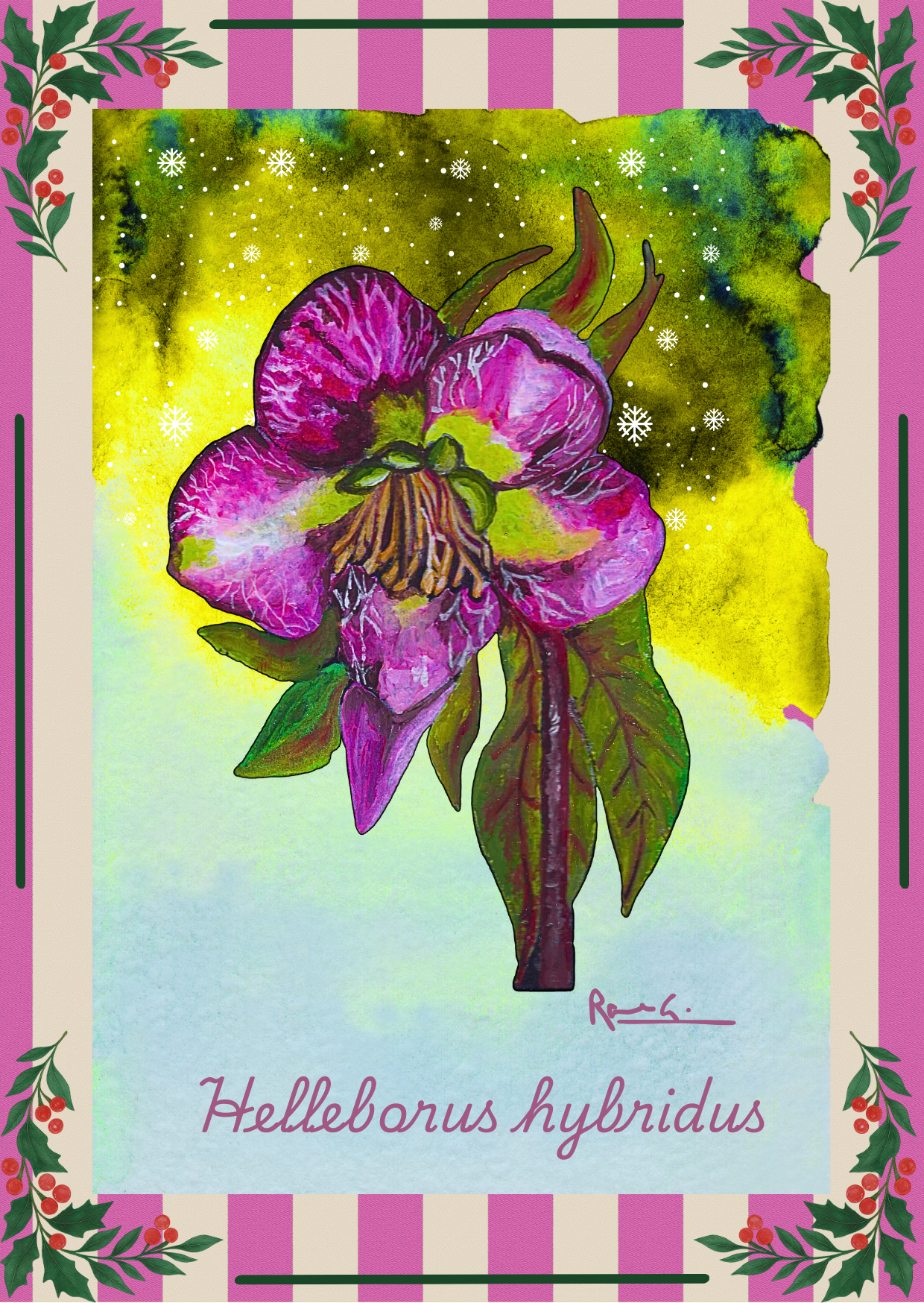
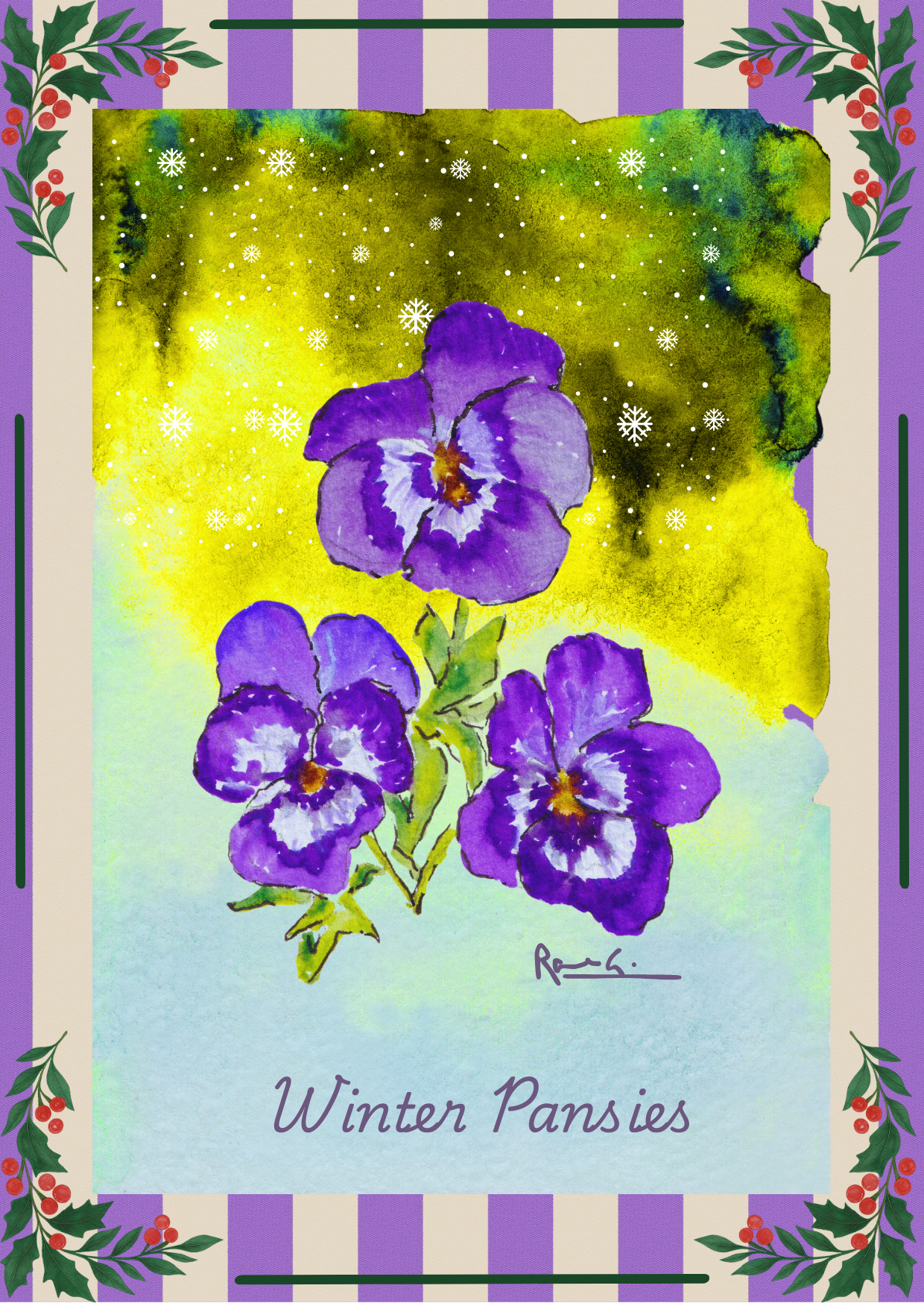
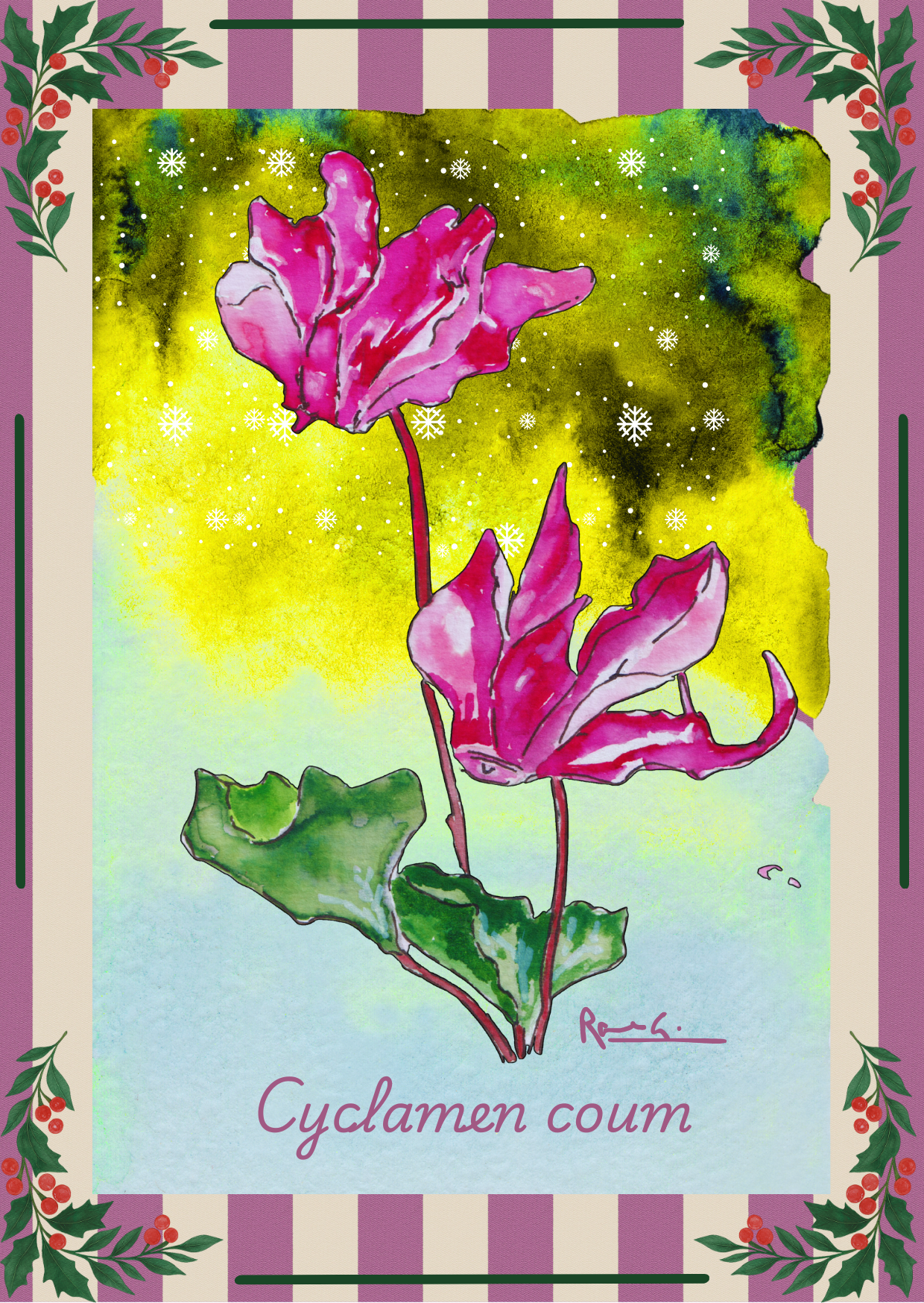
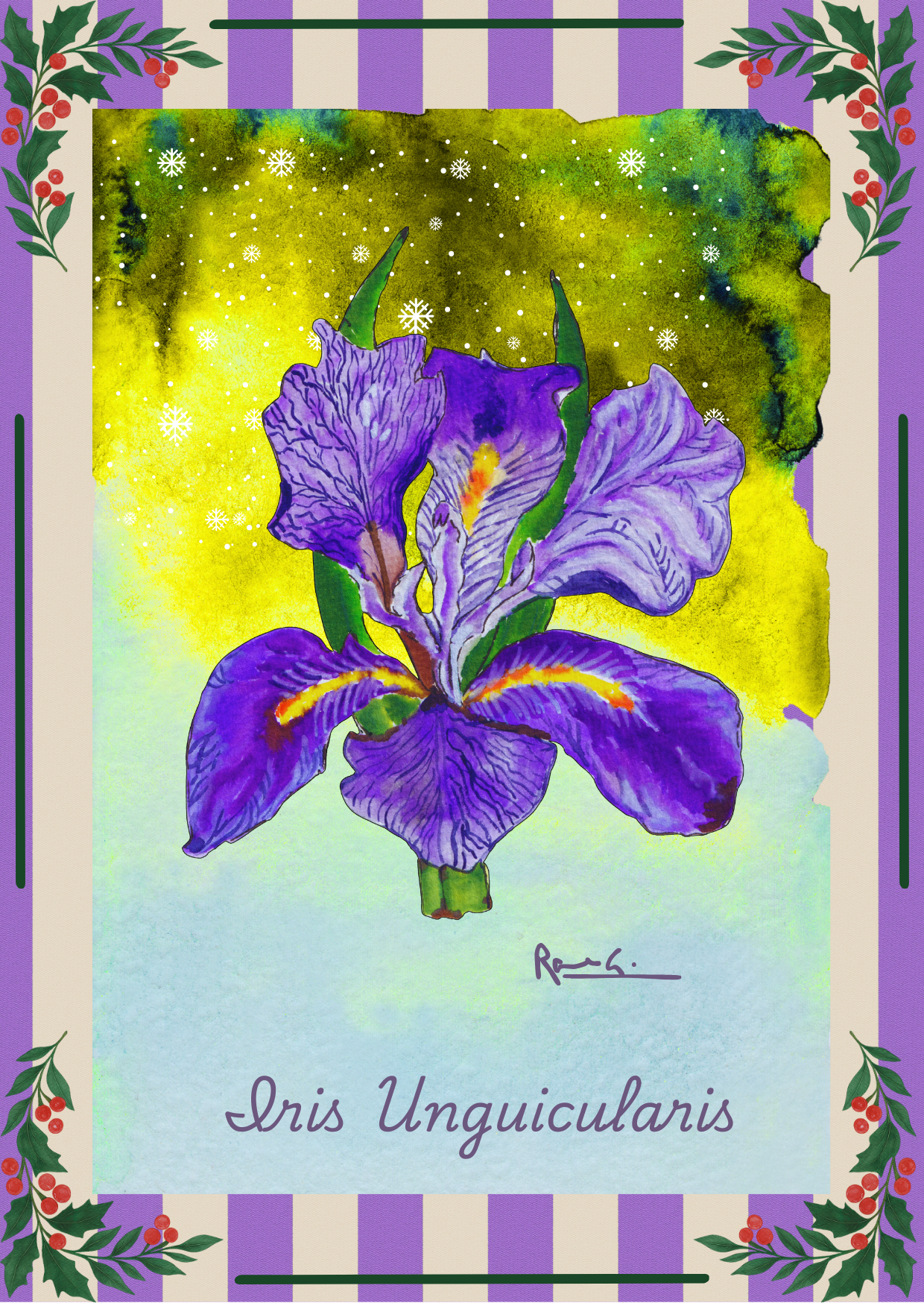
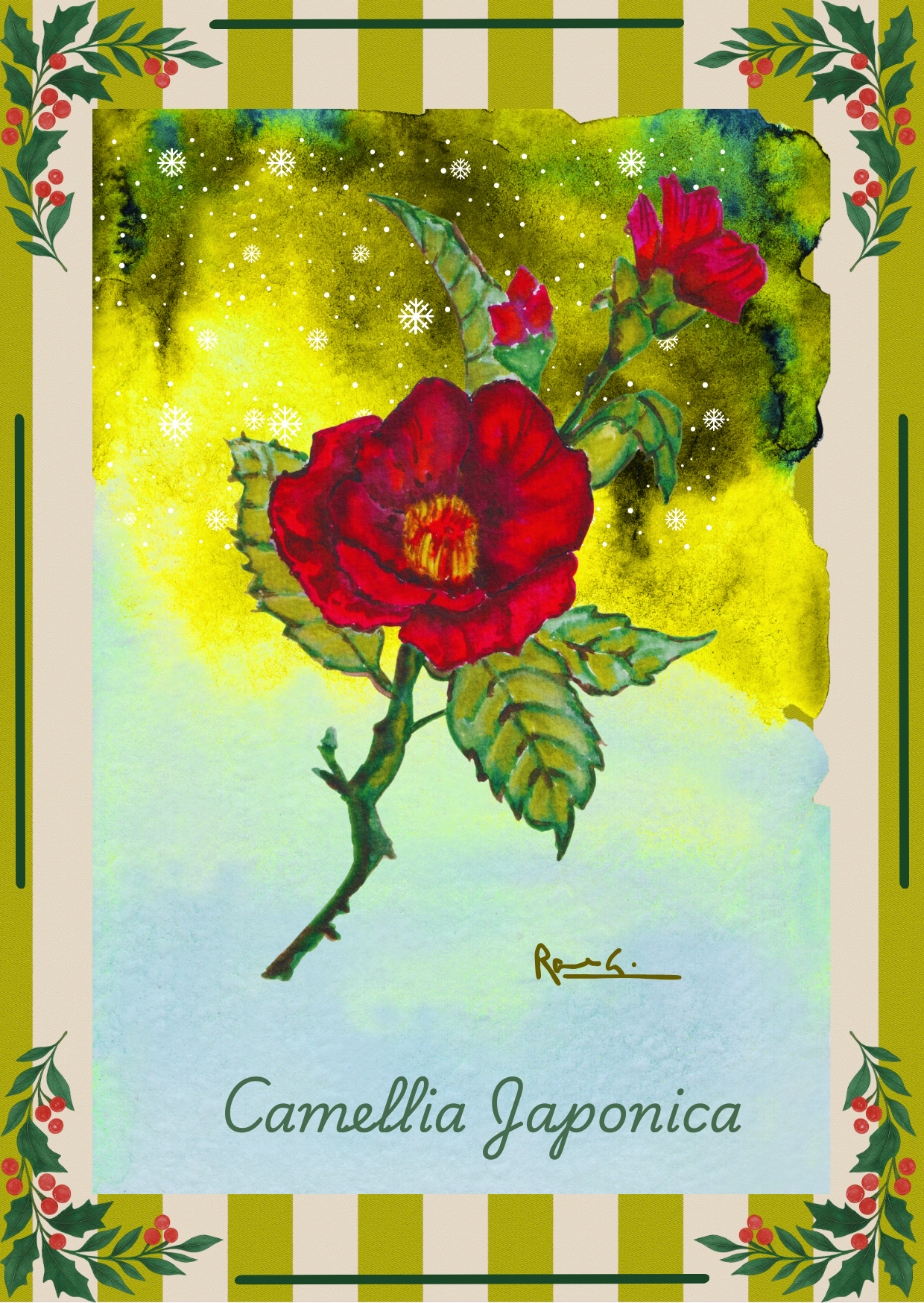
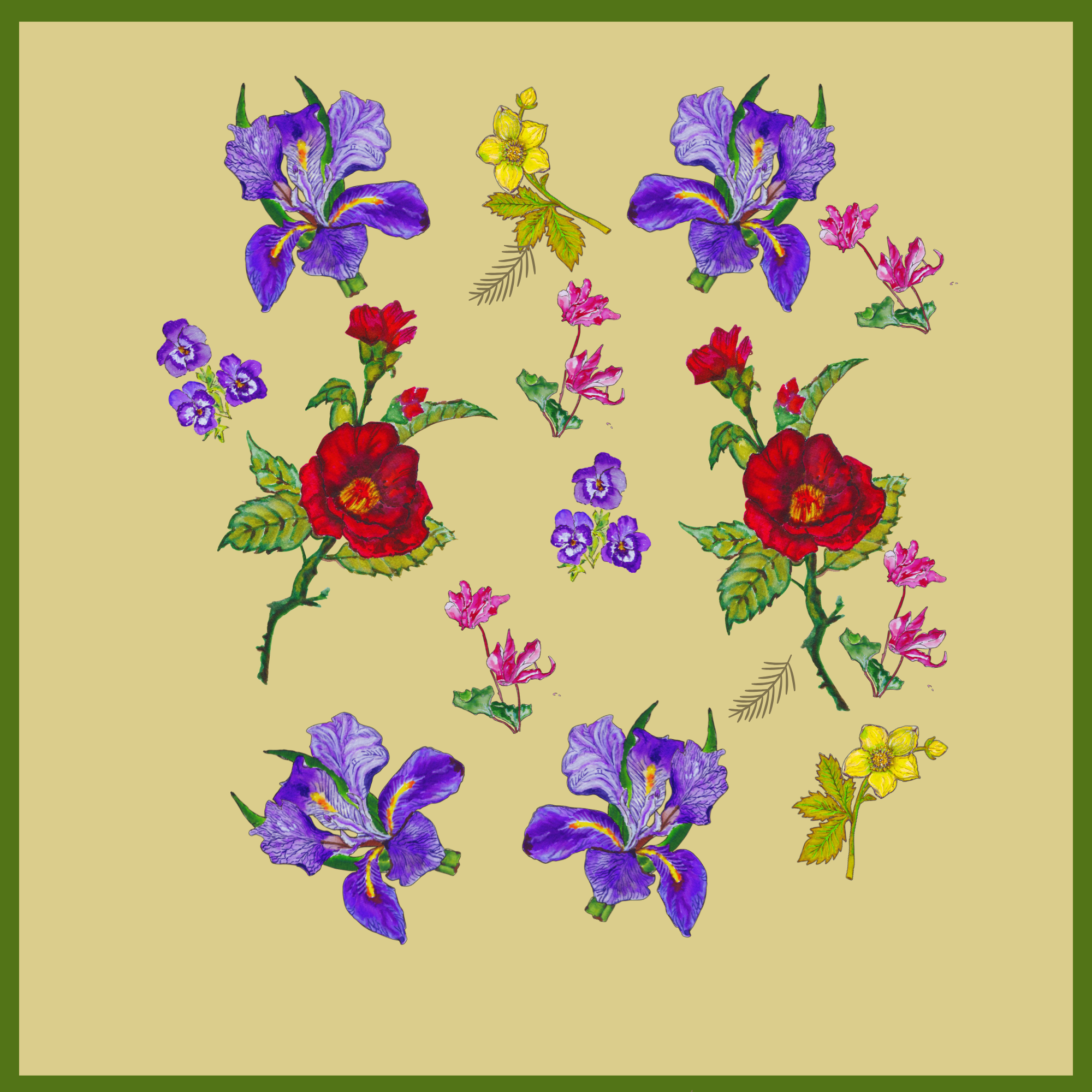
Winter is often mistaken for a season of dormancy, yet a closer look reveals a quieter, more contemplative kind of abundance. Against frost-stilled ground and pale skies, winter flowers assert themselves with remarkable confidence — pansies glowing low to the earth, hellebores unfurling with restrained elegance, camellias offering sculptural blooms, and iris unguicularis appearing almost unexpectedly along sheltered paths. These are the details that reward slow walks and attentive eyes, particularly in the weeks after Christmas when movement becomes ritual and reflection comes naturally. This collection of illustrations grew from those walks, each piece created with Karin markers, whose intensity and fluidity allow for both precision and softness. Their slightly abstract quality mirrors winter itself: pared back, subtle, and quietly expressive. Designed for A6 postcards and cushion covers, the work is an invitation to bring the season’s understated beauty indoors, where it can be lingered over long after the cold has passed.
Film and Theatre club
One Battle After Another @Vue *****
Some films end when the credits roll. One Battle After Another doesn’t. It lingers — in your mind, in your conscience, long after you’ve left the cinema.
Leo DiCaprio’s Bob is a man running from his own shadow — a violent past, a fractured world, and a desperate hope for his daughter’s future. Across the line stands Sean Penn’s Col. Steven — hunting them down to bury his own sins before joining an elite club of self-proclaimed “puritans.” You know the type — the ones who think America is a birthright, not a belief.
Benicio del Toro’s St. Carlos quietly steals scenes as the martial arts teacher who hides the desperate and the displaced — a man who believes in humanity more than borders.
What makes the film hit hard isn’t just the blood and dust — it’s the mirror it holds up to us. How did we end up here? When did we trade neighbourhoods for tribes, and compassion for fear?
One Battle After Another doesn’t give answers. It just makes you sit with the uncomfortable truth — that the war we’re watching might already be ours.
Emma @Oxford Playhouse ****
Directed by Stephen Unwin, this traditional yet spirited adaptation of Jane Austen’s Emma captures all the wit, warmth, and social satire that define Austen’s world. Through playful pacing and finely drawn performances, the production explores enduring themes of love, marriage, and class, with plenty of laughter along the way.
India Shaw-Smith is pitch-perfect as the meddlesome yet endearing Emma Woodhouse. She deftly balances arrogance with vulnerability, guiding the audience from irritation to affection as Emma learns to see her own flaws. William Chubb as Mr Woodhouse is a delight — his comic timing and dry one-liners repeatedly steal the spotlight.
The supporting cast shine too, their chemistry and subtle glances bringing Austen’s social dynamics vividly to life. Swift scene changes, clever footwork from the ensemble, and gorgeous costumes make the production a visual pleasure.
Unwin’s direction keeps the tone light and brisk, never losing the charm or bite of Austen’s humour. It’s a faithful, funny, and elegant evening of theatre — a treat for Austen fans and newcomers alike.
Bibliophile
Where the axe is buried by Ray Nayler (Sci-fi/Punk/thriller)⭐️⭐️⭐️⭐️⭐️
Where the Axe Is Buried plunges you into a chillingly plausible near-future Europe, torn between technocratic AI rule and creeping fascist regimes. Ray Nayler balances multiple perspectives — from a brilliant but trapped protagonist to an immortal-seeking president, from dissenters at the edge to citizens in quiet despair.
The strength of this novel lies not in tidy resolutions but in its messy, human core. It grips through ambiguity, moral tension, and the way small acts ripple into systemic change. Nayler doesn’t give us a hero who neatly wins. He gives us people struggling, faltering, and sometimes striking back.
The pacing is deliberate; the revelations land when you least expect them. Even when the plot obscures itself, the emotional and thematic heft never dims. It’s a daring exploration of power, identity, and resistance — a book that lingers after the last page.
The Mark by Frida Isgard (Sci-fi )⭐️⭐️⭐️⭐️⭐️
For UK readers still nursing the plebiscital bruise of 2016, a novel about a referendum splitting a nation may feel perilous. Fríða Ísberg’s The Mark earns the risk. Set in a near-future Iceland, it follows a campaign to mandate an “empathy test” that grants—or withholds—a public badge of moral soundness, the titular mark. Born in psychiatric circles and co-opted by politicians, the test has crept into schools, workplaces, and public services. Now its backers want it for everyone.
Fronting the “Yes” camp is PSYCH, led by therapy evangelist Ólafur “Óli” Tandri Sveinbjörnsson, who believes testing plus compulsory “emotional skills” education will build a safer society. The opposition gathers under MASC (“Men Against Social Compulsion”) and its media-slick figurehead Magnús Geirsson, who argues the test penalises young men and floods social feeds with testimonies of those “unmarked” and excluded.
As polling tightens, Ísberg tracks the acronyms’ tug-of-war through flawed, convincing perspectives on both sides. Though written in third person, her nimble close focus turns every chapter into our own empathy exam—far messier than any standardised metric. “An opinion,” reflects teacher Vetur on the eve of the vote, “is nothing but a decision about where you’re going to look and what you’re going to turn your back on.” The novel keeps our gaze moving.
Beyond referendum theatrics, The Mark interrogates our era’s faith in diagnostics and dashboards—how mental-health rhetoric, populism, virtue signalling, and algorithmic echo chambers can fuse into systems that flatten people and govern daily life. Ísberg’s dry, spiky humour and inventive imagery keep the dread buoyant; Larissa Kyzer’s translation is lucid, lively, and true to place.
Divisive premise, dazzling execution: The Mark refuses simplification and restores nuance—one of the standout translated novels of the summer.
What Remains After the Season
Now that the festivities are behind us—the lights packed away, the wrapping paper recycled, the quiet reclaiming our homes—it feels important not to forget those who passed this season in silence. Those without means, without company, without the small comforts that make winter bearable once the noise has gone.
I remain thankful for those who have been able to return home after months of upheaval, and for those piecing together lives interrupted by forces far beyond their control. But Ray Nayler’s words from Where the Axe Is Buried still linger with me:
“Imagine what you would be without resistance. Everyone complicit in your plans, or helpless in the face of them. Every desire that flickered in your brain fulfilled. Every person obedient to you.
Imagine how, as day followed day and everything was granted to you, your desires would metastasize. There is no cancer like the will, unopposed.
What we need most is opposition. It keeps us not only honest but human. Without it any one of us is a monster. Where there is complacency, every human power becomes monstrous. Togetherness is not agreement; it is the collective act of resisting one another.”
What stays with me most is the idea that opposition—thoughtful, humane resistance—is not something to fear. It is what keeps us honest. What keeps us human. Comfort without question breeds complacency, and complacency allows even ordinary power to become monstrous. Togetherness, as Nayler suggests, is not agreement; it is the collective act of holding one another in check.
Perhaps this is the lesson to carry forward into the new year. Not a soft, unquestioned kindness, but compassion with awareness. Empathy paired with responsibility. A reminder that it is often the quiet acts—attention, resistance, care—that prevent us from drifting into indifference.
The season may be over, but the work of staying human is not.

 Cogitatio
Leave a comment