
- Focal Point
- Believing in humanity , not division, not hatred
- Studio highlights
- Bibliophile
- At the cinema
- Lyme Regis: Our End-of-August Ritual
Focal Point
Life drowns us in noise—commitments, distractions, endless demands. In that blur, we risk losing sight of what matters. So I ask: what is my focal point?
For me, it’s the smallest, strongest things—kindness, trust, respect. They steady my household of three and ripple outward.
A small incident brought this home. My daughter lost her phone on a bus. Three attempts later, we retrieved it. The real lesson wasn’t about the phone—it was about focus. Without attention to small details, bigger things slip.
And that truth stretches wider. Our national gaze is fixed on asylum seekers, turned into scapegoats. But the real issue isn’t them—it’s crumbling healthcare, childcare, and social care, leaving families to cope alone.
When we misplace our focus, we chase the wrong enemy. When we return it—to daily acts of kindness, to well-funded services—we steady not just our lives, but our society.
Because in the end, it’s not noise or anger that sustains us. It’s focus. On what matters most.
Believing in humanity , not division, not hatred
At the heart of every society lies a choice: to believe in one another, or to surrender to fear. Too often, we are urged toward the latter. Leaders rise on promises not of unity, but of suspicion. They point to difference—of race, religion, nationality, gender—as a fault line, a danger. And people, weary and anxious, follow. Division has become a political strategy, wielded like a weapon.
But humanity is not built on suspicion. It is built on connection. Every small act of kindness—holding open a door, listening without judgment, checking on a neighbour—shows how natural it is for us to care. We are wired to look after one another, to share burdens, to extend trust. When leaders try to fracture that instinct, they are not just undermining politics—they are undermining what makes us human.
The danger is clear. When fear becomes the focal point, hatred follows. Refugees become scapegoats for broken public services. Migrants are blamed for economic strain that is rooted in policy failures. Communities are set against one another while those in power escape accountability. Division blinds us to the real problems and drains us of the will to solve them together.
Yet history reminds us that hatred never sustains a society. It corrodes it. The moments we look back on with pride—the civil rights movement, the fight against apartheid, communities rebuilding after war or disaster—are moments when people chose humanity over division. When they refused to believe the lie that their neighbour was their enemy.
To believe in humanity today is a radical act. It is to insist that empathy is stronger than fear. It is to demand leaders who unite rather than fragment, who address root causes instead of inventing scapegoats. And it is to live, in small daily ways, as though our shared dignity matters more than our differences.
The world will not change overnight. But every time we reject division, every time we refuse hatred, we tilt the balance toward a society worth living in. Believing in humanity is not naïve—it is necessary. Because without it, there is no future, only fragments. With it, there is the possibility of wholeness, of peace, of a world rebuilt not on fear, but on trust.
Studio highlights
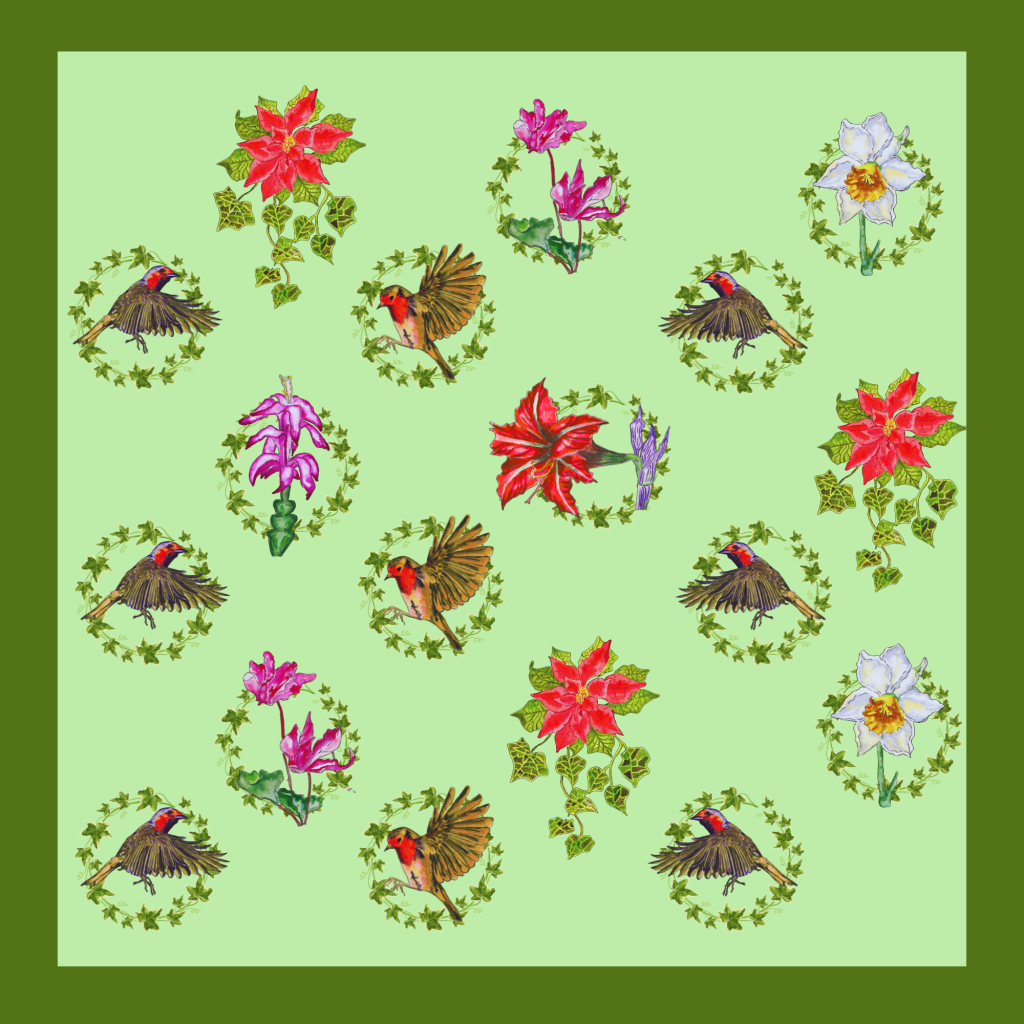
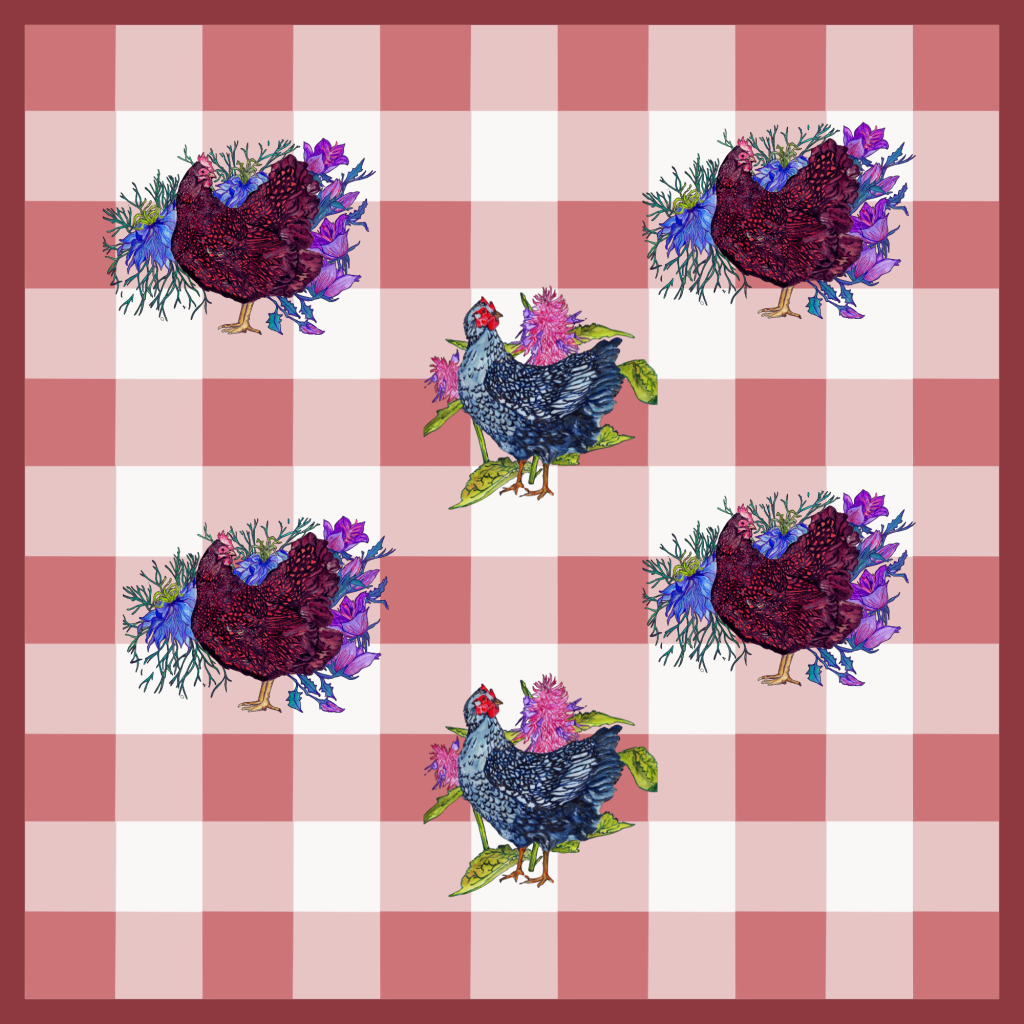
Festive collection – Autumn and Winter
Bring the season and the countryside into your home with these beautifully illustrated cushions.
🎄 Christmas Garden – A joyful blend of poinsettias, amaryllis, cyclamen, and narcissus, intertwined with ivy wreaths and playful robins. This design captures the heart of Christmas: nature, warmth, and a touch of festive magic. Perfect for adding a seasonal glow to any room.
🐓 Country Hens – A rustic celebration of farmyard life, with richly detailed hens nestled among vibrant blooms against a classic gingham backdrop. This cushion radiates rural charm, evoking the comfort of slow mornings and timeless countryside kitchens.
Together, they bring a mix of cosy rural aesthetic and festive cheer—ideal for gifting or refreshing your home décor.
🕸️ Hauntingly Beautiful Decor – Halloween Collection 🕸️
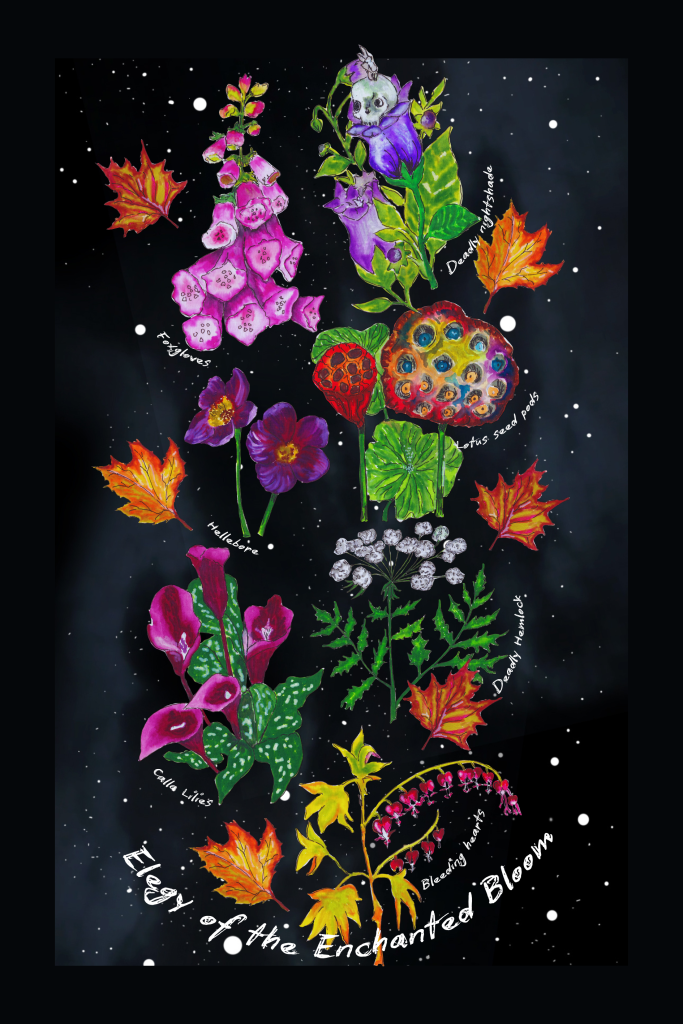
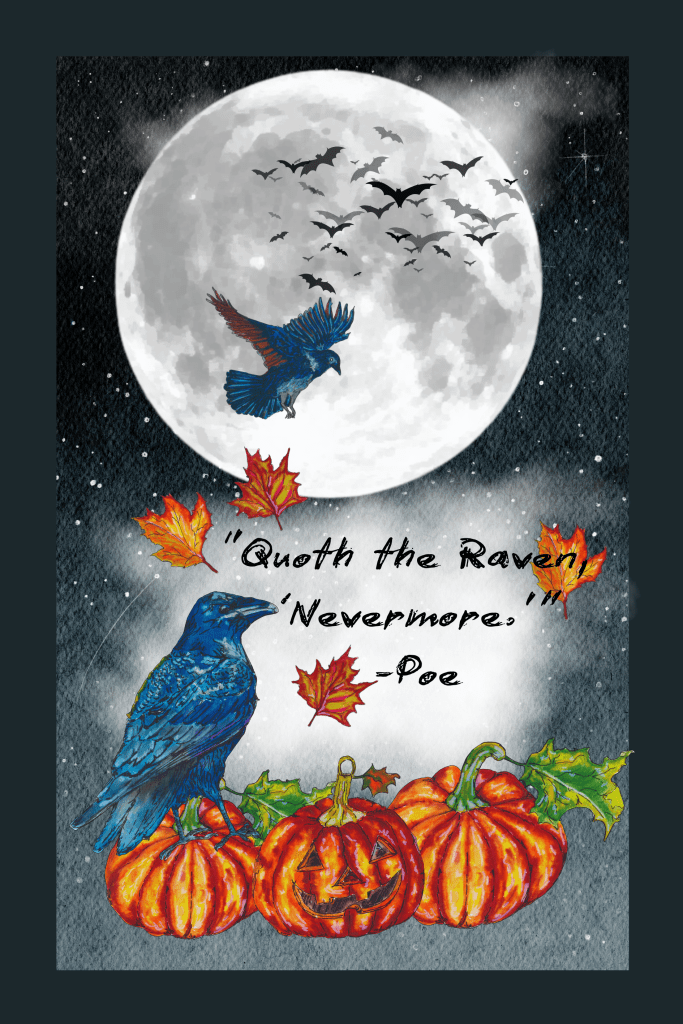
Step into the season of shadows with these richly illustrated designs, perfect for adding a gothic flourish to your walls or kitchen this Halloween.
🌑 Elegy of the Enchanted Bloom – A darkly magical arrangement of poisonous and mystical flowers—deadly nightshade, hellebore, foxgloves, bleeding hearts—intertwined with autumn leaves against a starry night sky. This piece is a celebration of nature’s eerie beauty, balancing elegance with a sinister seasonal edge.
🌕 Quoth the Raven – Inspired by Edgar Allan Poe’s immortal verse, this design brings together a glowing harvest moon, watchful ravens, swirling bats, and carved pumpkins. It’s the perfect marriage of gothic literature and Halloween tradition, making it an atmospheric statement for any room.
Together, these designs embody the spirit of Halloween—mystical, gothic, and beautifully haunting—ideal as striking wall decor or seasonal tea towels that turn everyday spaces into enchanted ones.
Bibliophile
The Hallmarked Man by Robert Galbraith (***)
Robert Galbraith’s The Hallmarked Man is a sprawling mystery that offers intriguing ideas but struggles to deliver a fully satisfying whole.
The strengths lie in character and atmosphere. The chemistry between Strike and Robin continues to shine: moments like Strike gifting Robin a silver charm bracelet tied to their shared cases, or his calm reassurance after she’s attacked by a masked man, give the novel real emotional weight. These touches remind us why readers invest in the series.
The backdrop is equally compelling. The case revolves around a mutilated body found in the vault of a silver shop specialising in Masonic silverware, right next to Freemasons’ Hall. This allows Galbraith to delve into the rituals, secrecy, and influence of the Masons—including their shadowy ties to the police. It’s an unusual and fascinating thread, and one of the book’s most original elements.
But despite these strengths, the novel falters. At over 900 pages, it often drags, weighed down by a vast cast of characters—Decima Mullins, Rupert Fleetwood, Jason Knowles, William Wright, Niall Semple, Tyler Powell, and many more—whose stories blur together. At times I felt I needed a notebook just to keep track.
At the cinema
The Roses (Comedy/Drama) ****
The Roses is a darkly funny, unsettling take on the breakdown of a marriage, anchored by superb performances from Olivia Colman and Benedict Cumberbatch.
Colman’s Ivy Rose is thriving with her new restaurant, while Cumberbatch’s Theo struggles with his fading career. What begins as friction quickly escalates into open warfare. Their chemistry makes the story compelling—you believe both the love that once bound them and the bitterness that now consumes them.
Tony McNamara’s script crackles with sharp dialogue, shifting from playful wit to venom in seconds. Colman and Cumberbatch deliver it flawlessly, turning small spats into cutting battles. The supporting cast, including Andy Samberg, Kate McKinnon and Allison Janney, adds humour and contrast without diluting the central conflict.
The film’s strength lies in how it balances comedy with genuine emotional pain. At times, though, the tone wobbles between satire and grim realism, and a few supporting characters feel more like sketches than people. Comparisons to the original War of the Roses are inevitable, and some plot beats will feel familiar.
Even so, The Roses stands out as a stylish, unsettling story of love gone sour—funny, painful and powered by two unforgettable performances.
Lyme Regis: Our End-of-August Ritual
The last days of August always bring a change. This year, the long dry spell finally broke—rain revived my weary lawn, sparing me those endless trips with the watering can. But for my family, the true marker of summer’s end is our yearly escape to Lyme Regis.
It’s a ritual stitched into memory: a few quiet days by the sea to honour my father’s passing, followed by the joy of our wedding anniversary. Somehow Lyme holds space for both reflection and celebration.
Why Lyme? Because it’s magic. A relaxed, timeless town that feels like a hidden jewel on England’s coast. Even under grey UK skies, Lyme glimmers. Late August here also means one thing: Lyme Folk Weekend. This year we had the absolute joy of hearing Turin Brakes and Ninebarrow & Friends at the Marine Theatre—a night of pure soul. By day, the town hums with Morris dancers on the seafront and music spilling into the streets. And of course, no trip is complete without indulgence:
- Galley Café – legendary cakes, coffee, and breakfasts with service to match.
- Blue Lias Gallery & Coombe Street Gallery – local ceramics and gifts.
- Paper Bird – stationery heaven.
- Mill Side – a cosy hub of shops, cafés, and even a microbrewery.
Add fossil hunting on the Jurassic Coast, fish and chips in a pub, and a catch-up with friends in Devon and Exeter, and the days slip by too fast. Lyme Regis never fails to bring out the child in us—and that’s exactly why we’ll keep coming back.

 Cogitatio
Leave a reply to barbarianfreebd230dc5f3 Cancel reply